LONGLINE
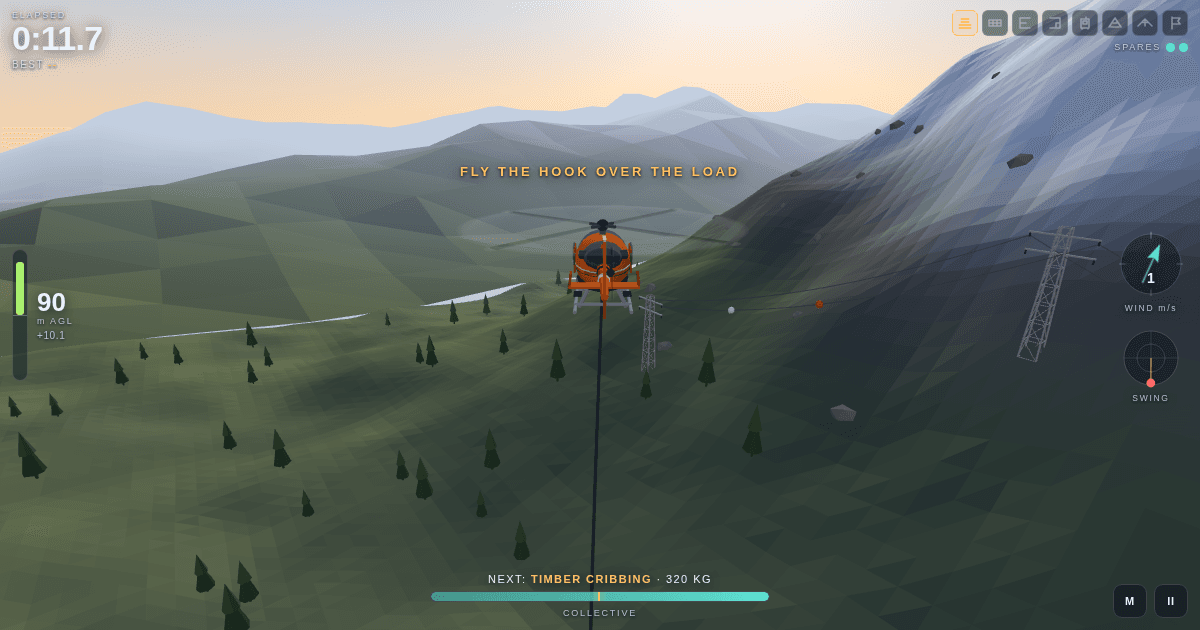
The helicopter is the easy part. The 900 kilos swinging thirty metres beneath it has plans of its own.
Simulation
114@emergame
Build it, run it, tweak it. Systems you can poke until they hum.
The helicopter is the easy part. The 900 kilos swinging thirty metres beneath it has plans of its own.
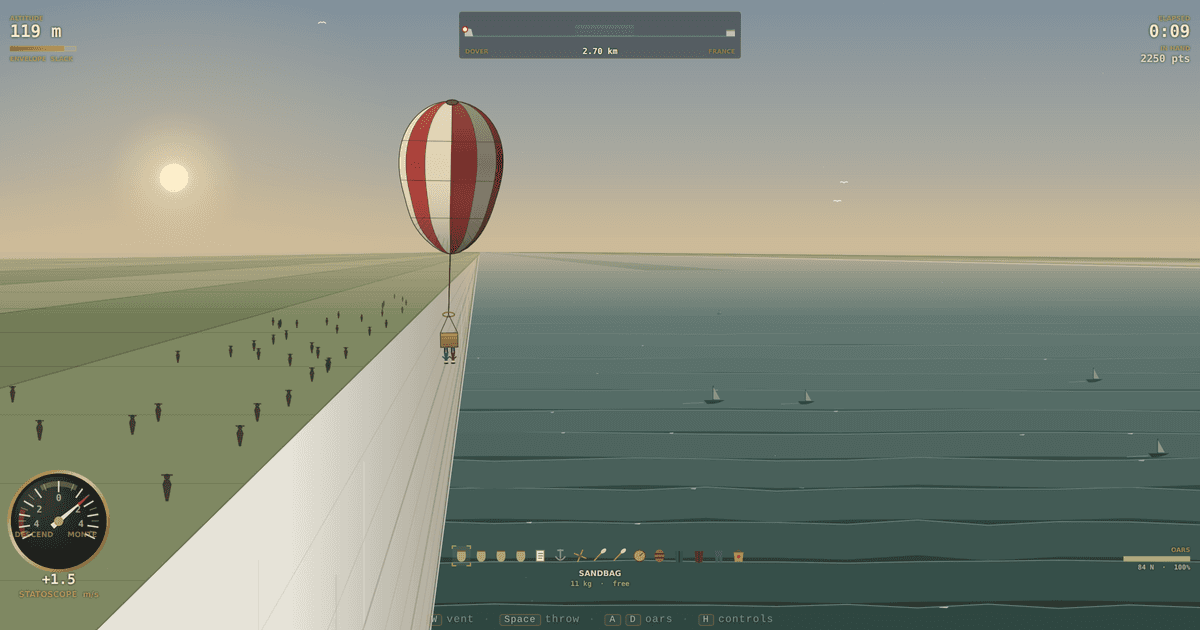
Mid-Channel, 1785. The sea is coming up to meet you. Everything in the basket can go over the side — the anchors, the brandy, your trousers.
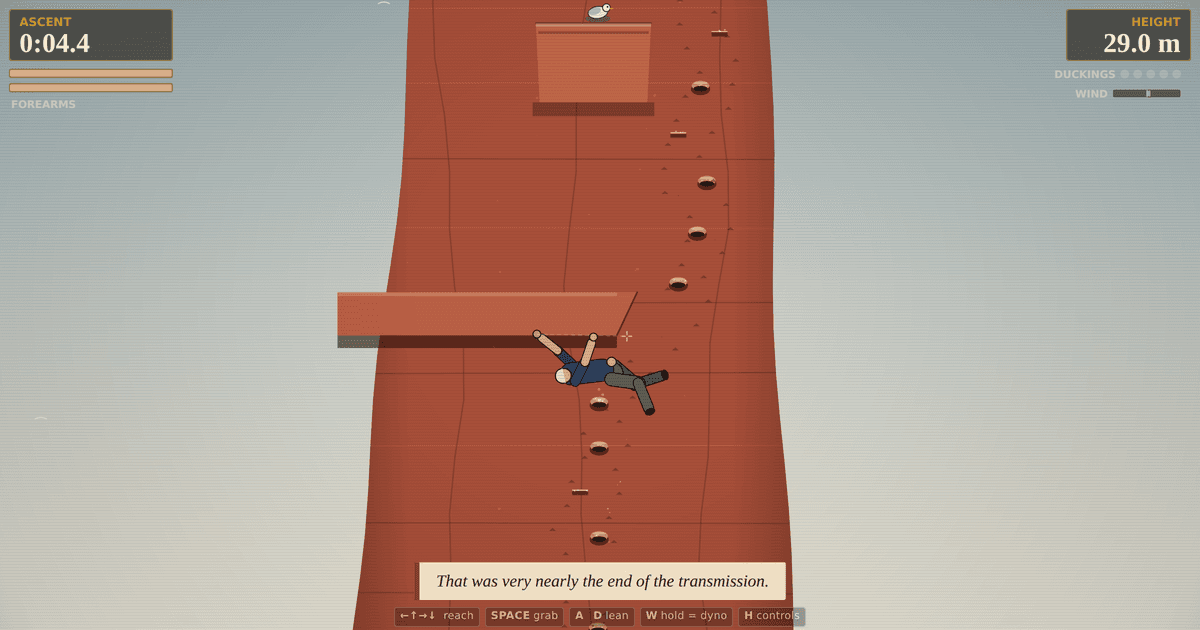
The hold is out of reach. Jump anyway: at the top of the arc there is an instant where you weigh nothing. Catch it there. Live, on air.
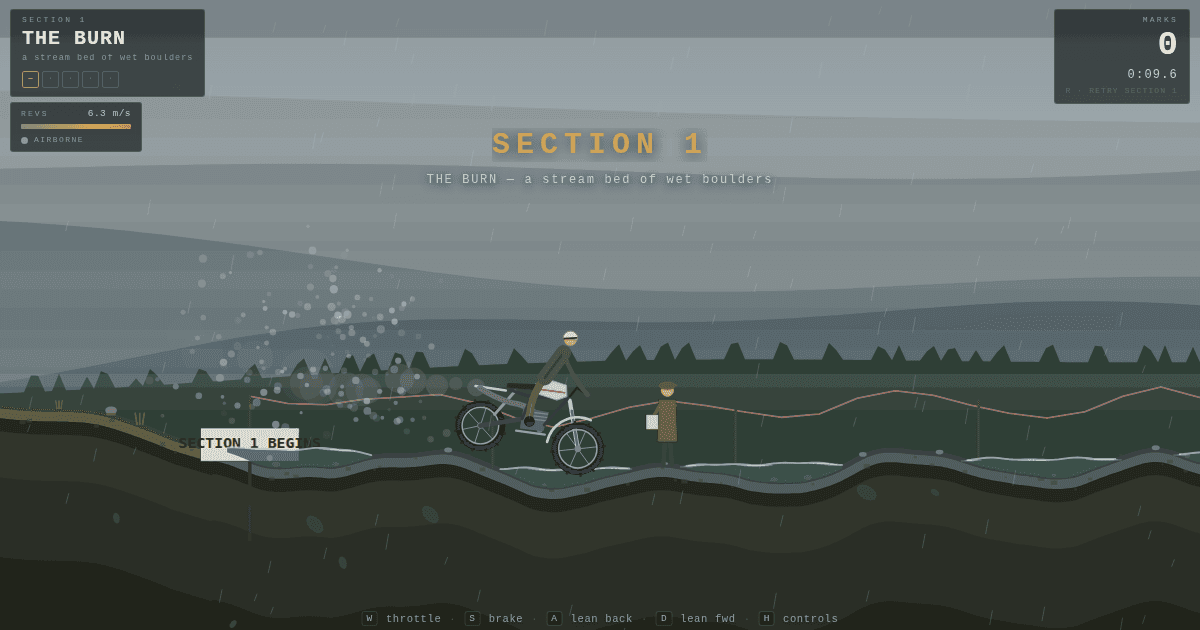
No clock. No finish line. A man in tweed counts every time your boot touches Scotland — and the lowest score wins.
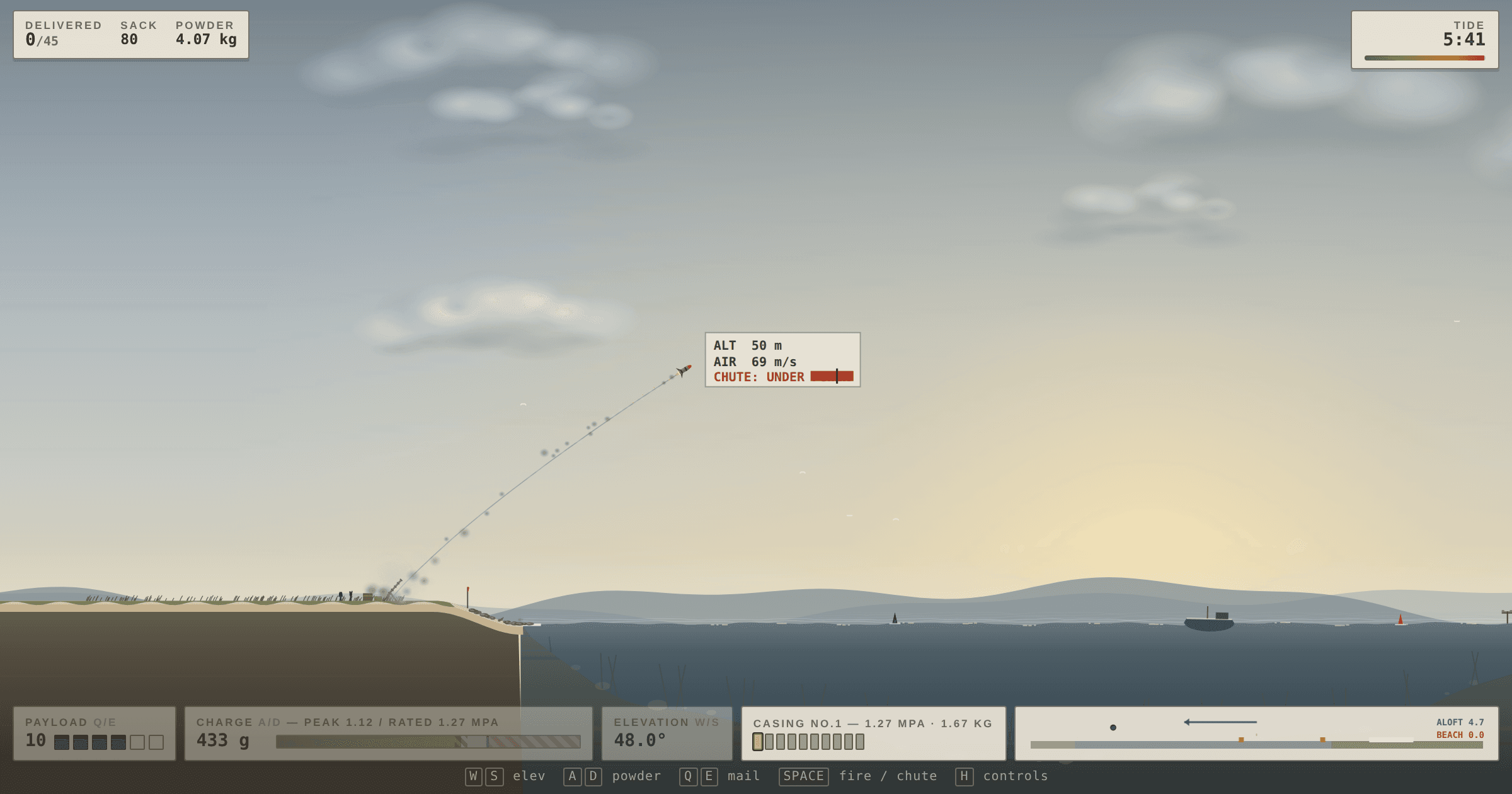
The mail boat can't cross. Eighty letters, ten hand-rolled rockets, one keg of powder — and history says the rocket bursts.
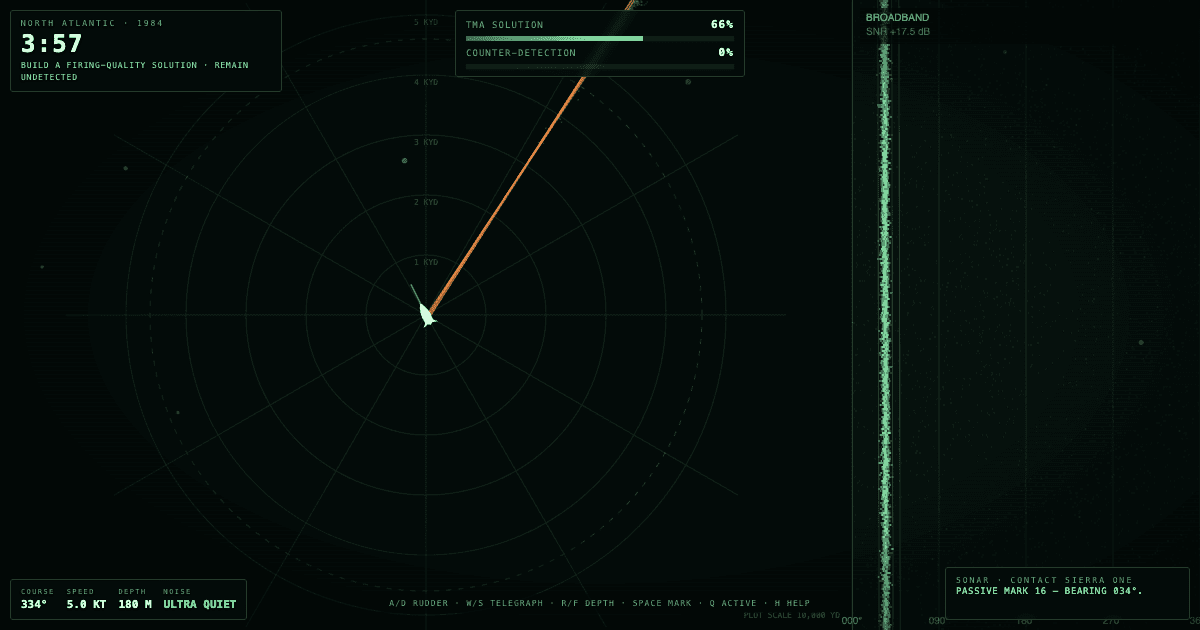
Build a bearing-only solution in the dark. Every knot you make is another chance they hear you.
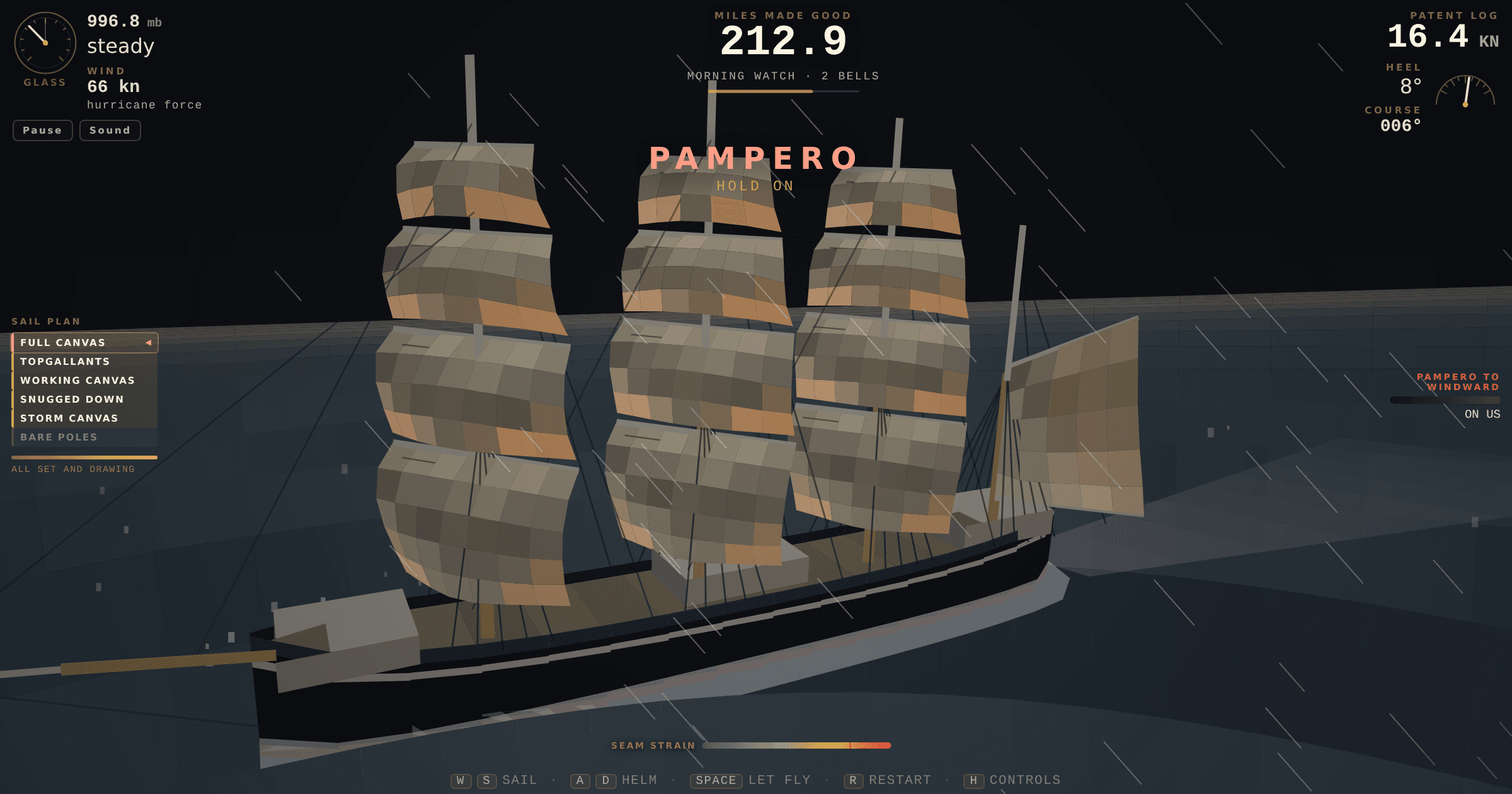
The glass is falling and the royals are still set. Canvas is your engine — and the squall is twenty seconds from taking the masts.
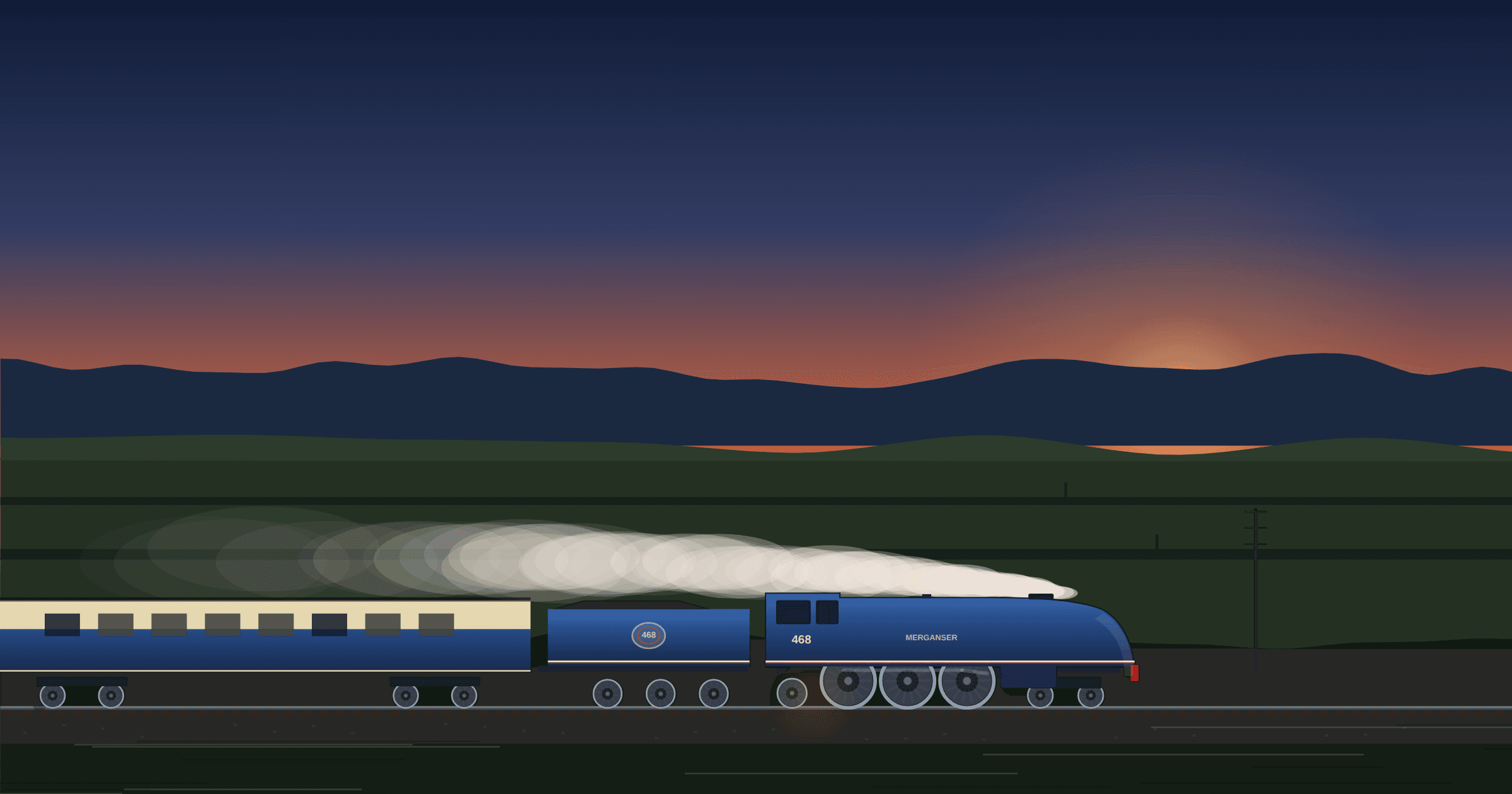
Britain wants the steam record back. Seven miles of falling gradient, 250 psi, and a bearing that melts if you're greedy.
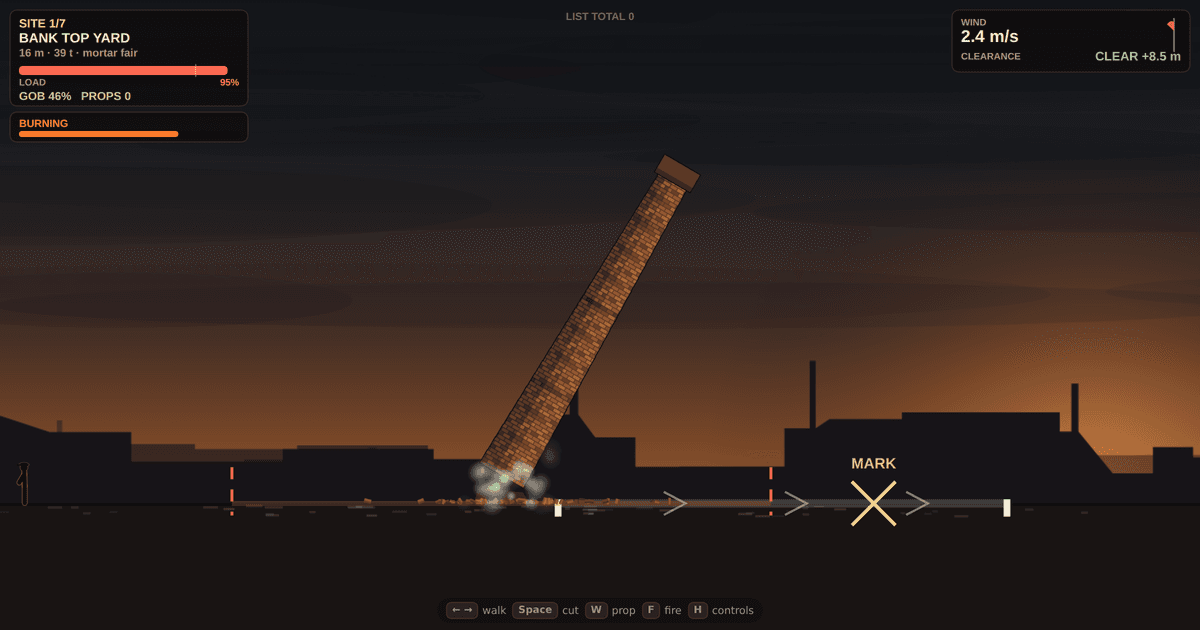
Cut the gob, set the props, light the fire — then run. Four hundred tons of brick falls exactly where you asked. If you asked right.
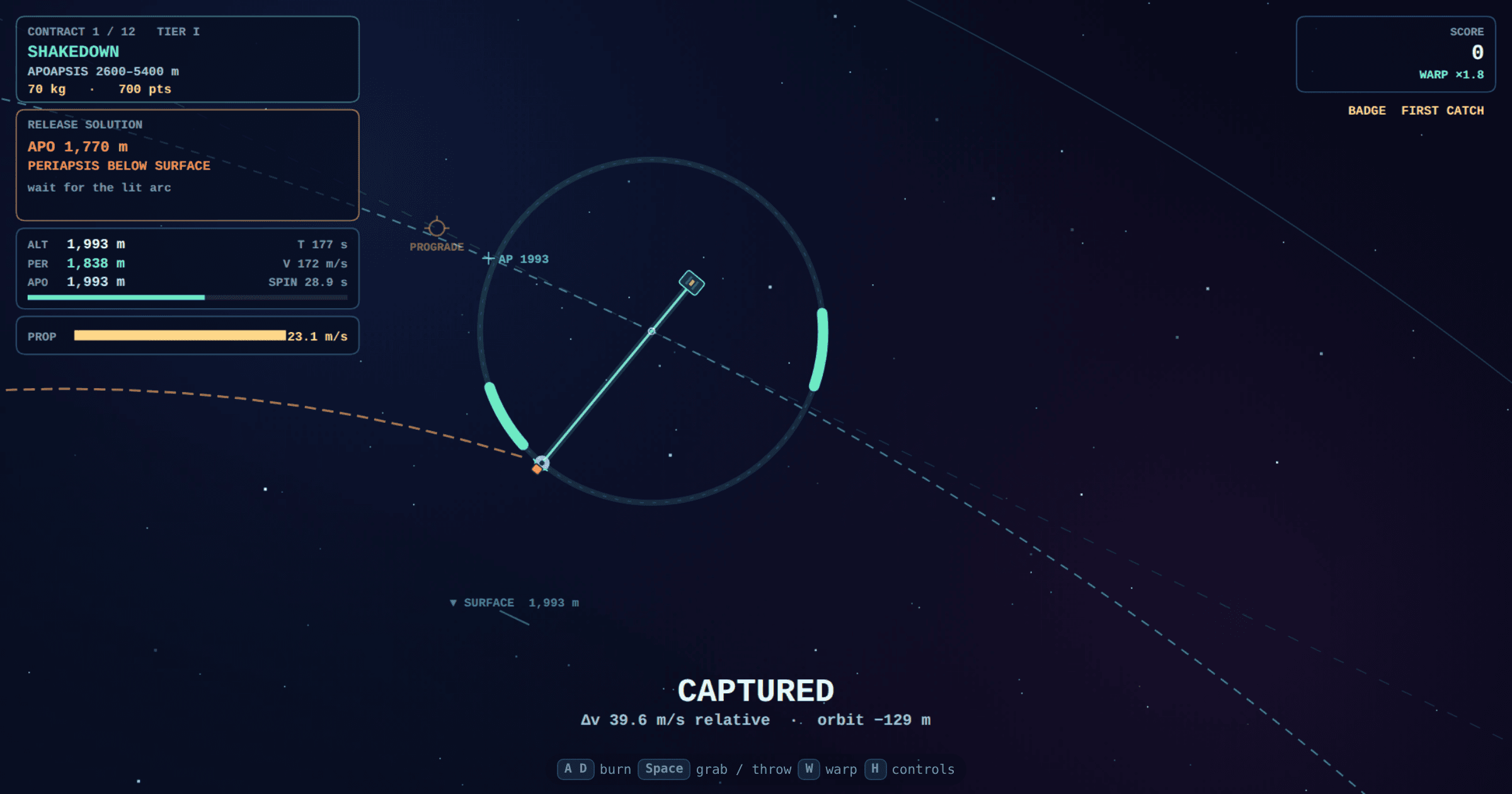
Nothing you catch can reach orbit. Nothing you throw is free. Trash is your engine — and every contract pulls your sky down.
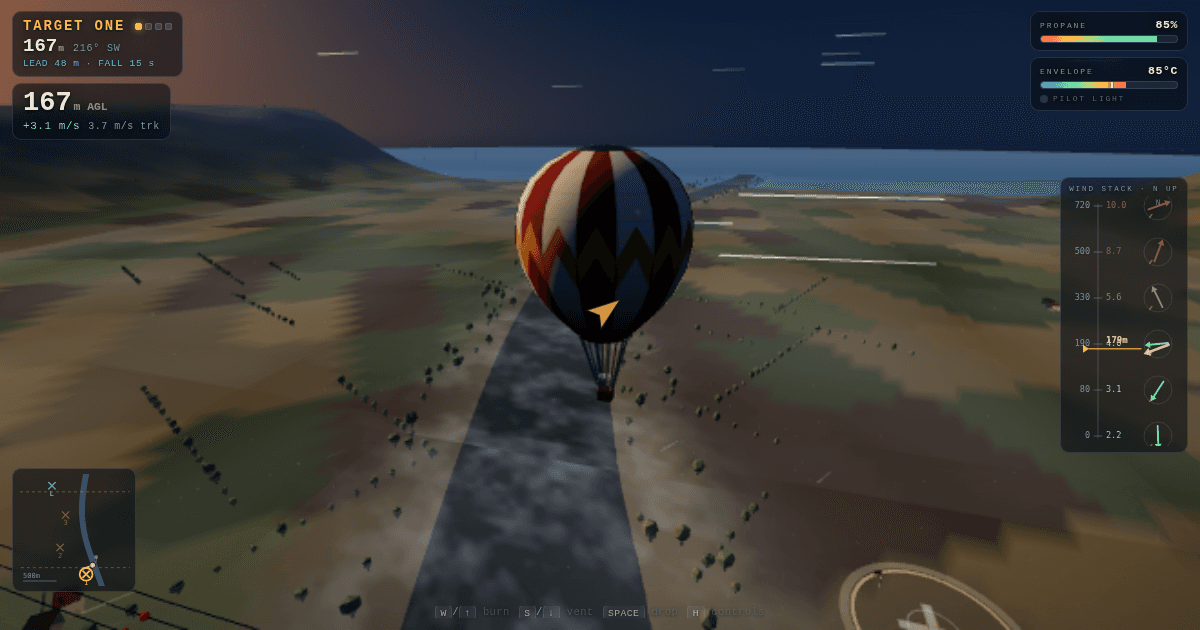
There's no steering. Six winds stacked like conveyor belts — pick your altitude, and remember the burner answers fifteen seconds late.
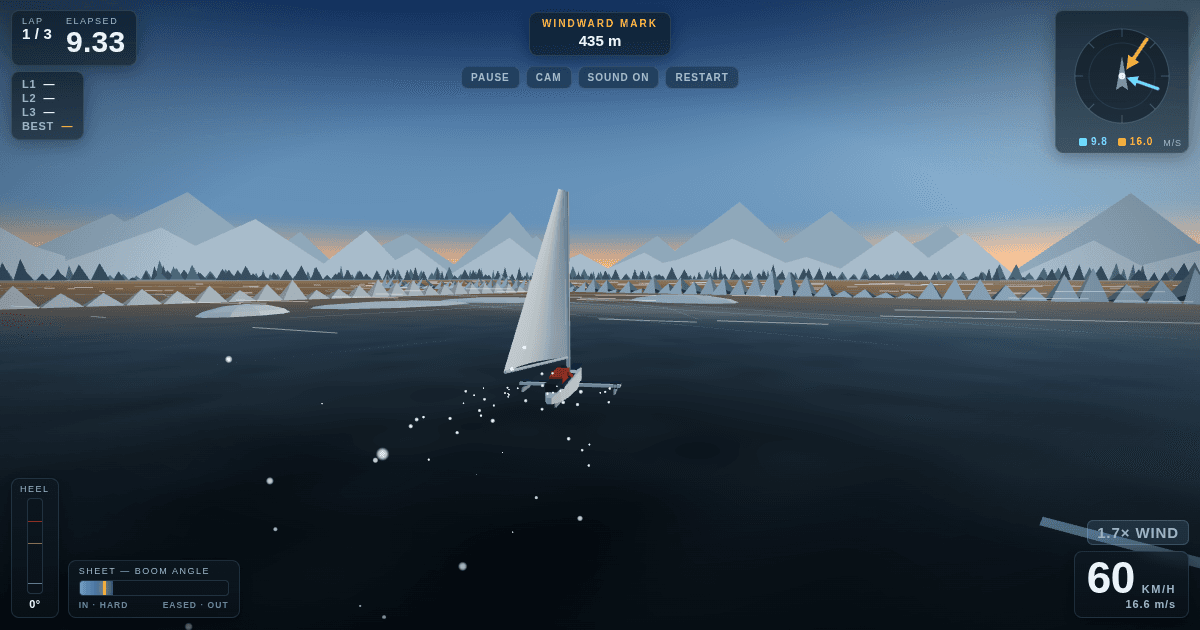
Sheet in and the boat builds its own wind. Ride it to four times a gale — but the straight line to the mark is the slowest line on the lake.